
Article 3: The Power Of Layered Security: Building Fortresses Against Ransomware
In a world where digital landscapes are fraught with uncertainties, the need for strategic and proactive cybersecurity measures has never been more critical. Having explored the realms of “Expect the Unexpected: Building a Rock-Solid Security Posture to Defend Against Ransomware” and delved into the intricacies of “Stay Ahead of Threats: Taking the Offensive in Ransomware Defence” in our preceding articles, we now embark on the third instalment of our cybersecurity series: “The Power of Layered Security: Building Fortresses Against Ransomware.”
As we reflect on the unexpected challenges discussed in our first article and the proactive defence strategies highlighted in the second, we recognize that the threat landscape is dynamic and ever evolving. It’s against this backdrop that we turn our attention to the formidable defence mechanism of layered security. This approach acts as a natural progression, fortifying organizations against one of the most insidious adversaries of the digital age – ransomware.
Understanding the Threat Landscape:
Ransomware attacks, as we’ve witnessed in our exploration of unexpected challenges, have become more sophisticated and frequent. The statistics presented in our second article underscore the gravity of the situation. Now, armed with insights into the unexpected and fortified by proactive defence strategies, we delve into the intricate layers that compose a robust defence against ransomware.
The Fundamentals of Layered Security:
Layered security, as the name suggests, involves deploying multiple security measures to protect against various potential threats. This strategy acknowledges that a single security measure is no longer sufficient in the dynamic and sophisticated landscape of cyber threats. The fundamental premise is to create a multi-faceted defence that acts as a deterrent at various points of a potential attack.
Network Security:
At the core of layered security is network security, the first line of defence against external threats. Firewalls and intrusion detection systems play a pivotal role in preventing unauthorized access, acting as a digital barrier that scrutinizes incoming and outgoing traffic. By strategically placing these defences, organizations can create a virtual fortress safeguarding their digital assets.
Endpoint Protection:
Recognizing that each device connected to a network is a potential entry point for cyber threats, endpoint protection becomes paramount. Antivirus software, once the frontline defence, has evolved into more sophisticated solutions, such as Endpoint Detection and Response (EDR). These advanced tools not only identify and eliminate threats but also provide insights into potential vulnerabilities, enabling proactive defence.
Email Security:
Email, a ubiquitous communication tool, also stands as a common vector for ransomware attacks. A layered security approach involves robust email security measures, including advanced filtering systems that detect and quarantine malicious attachments or links. Encryption adds an additional layer of protection, ensuring that sensitive information remains secure even if an email falls into the wrong hands.
Other Layers of Defence:
Beyond the foundational layers, additional measures contribute to a comprehensive defence. Application security involves securing the software and applications integral to business operations. User access controls limit privileges, minimizing the potential impact of a breach. Regular system updates ensure that vulnerabilities are patched promptly, closing potential avenues for exploitation.
Harmonizing the Layers:
The strength of layered security lies in the synergy between its components. Each layer complements the others, creating a defence-in-depth strategy. When an attacker encounters multiple barriers, the likelihood of a successful breach diminishes significantly. This harmonization is not just about technology but also involves user education and awareness, making employees an active part of the security ecosystem.
Practical Tips and Best Practices :
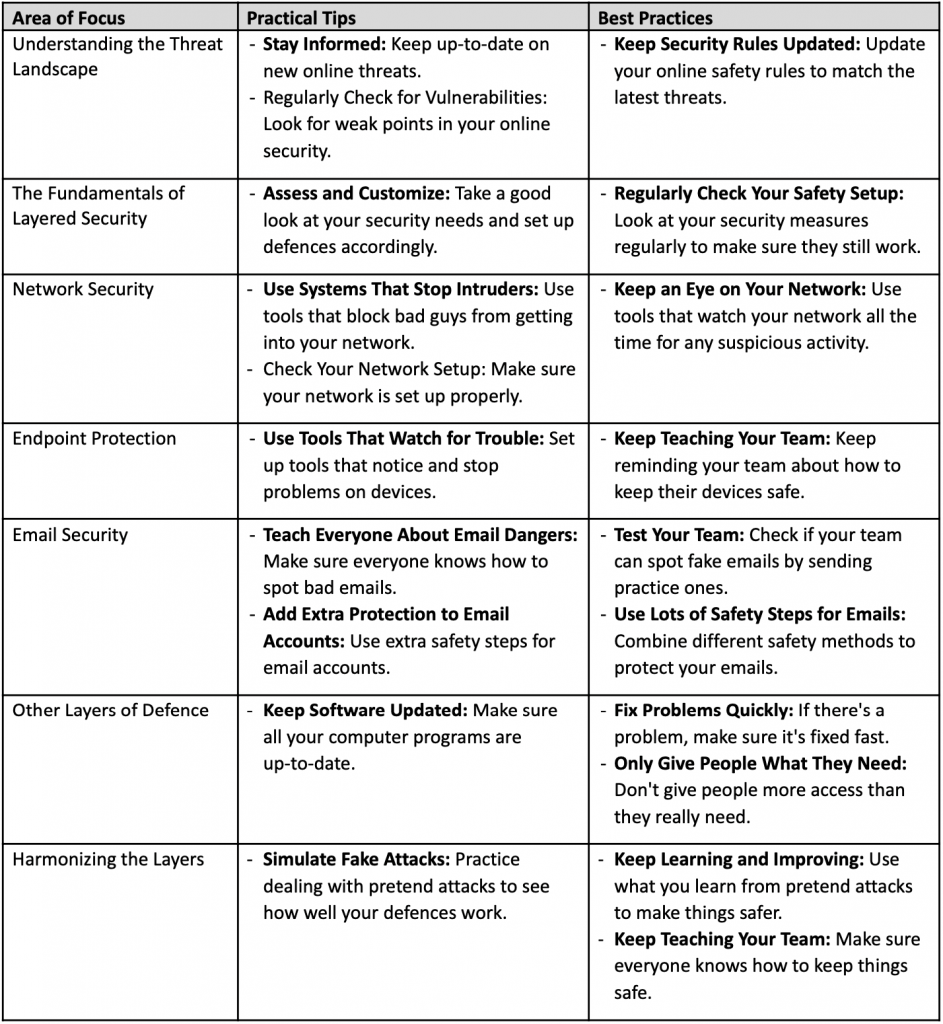
Conclusion and Way Forward : As technology advances, so do the threats that businesses face. Ransomware, a particularly insidious menace, necessitates a proactive and comprehensive defence. The adoption of a multi-layered security approach, as discussed in this article, emerges as a strategic imperative in safeguarding against the ever-evolving landscape of cyber threats. In building these digital fortresses, organizations can fortify their resilience and ensure the longevity of their operations in an increasingly interconnected world. As we finish talking about layered security, what’s next is clear – always be ready to learn and stay safe. Regularly check and improve how you stay safe online, use new tools when needed, and help your team understand how to keep everything secure. By doing these things, you’re not just protecting information; you’re making sure your work stays strong in a world that’s more and more connected, where safety isn’t just a plan but an ongoing process.

Recent Comments